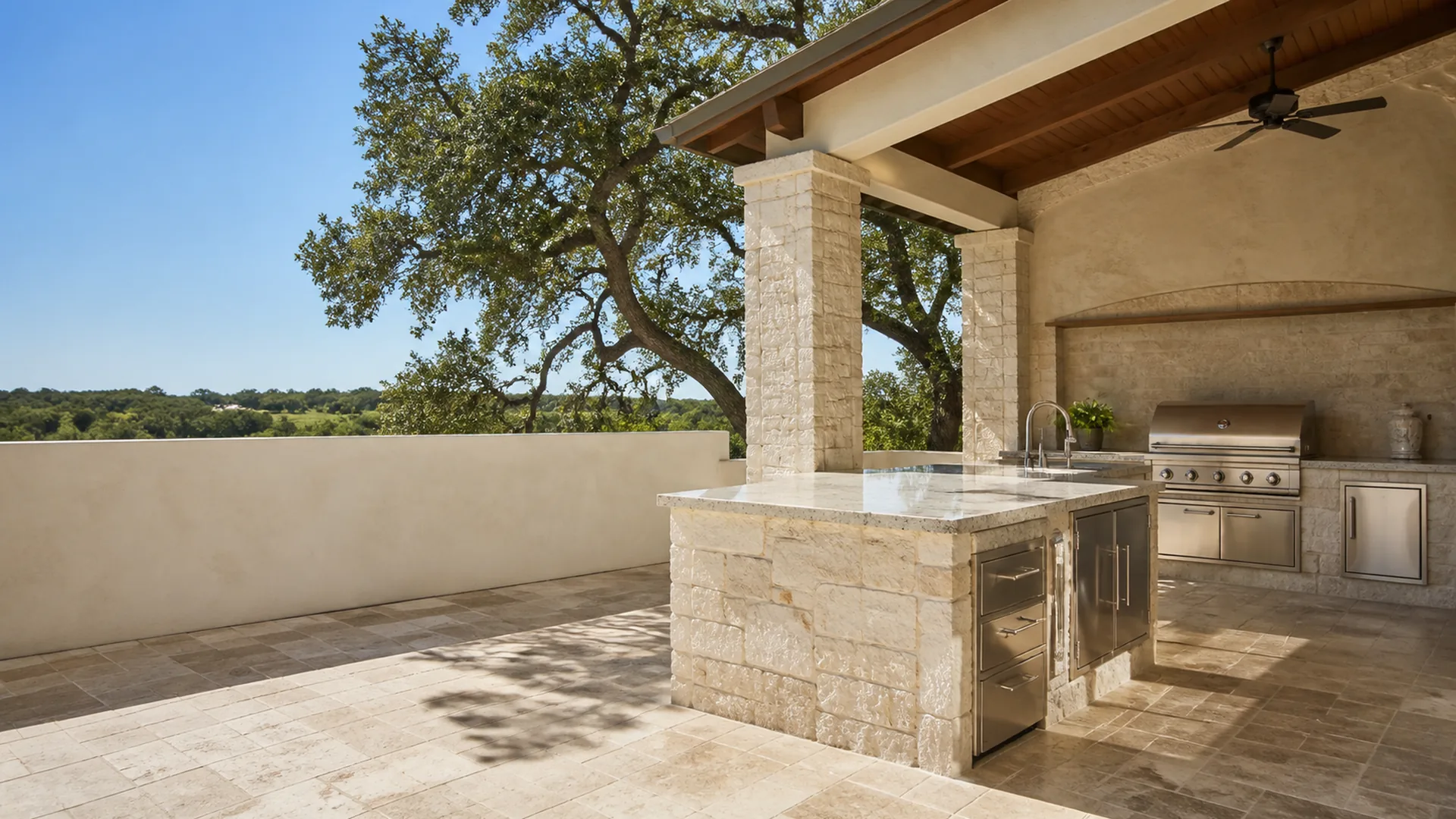
An outdoor kitchen is one of the highest-impact upgrades you can make to a San Antonio backyard — and with our long patio season, it earns its keep most of the year. The first question everyone asks is the right one: what does it actually cost? In 2026, an entry-level built-in grill setup in San Antonio starts around $5,000–$12,000, a custom mid-range outdoor kitchen runs $12,000–$30,000, and a fully loaded, covered outdoor kitchen with premium appliances and stone can reach $30,000–$75,000 or more. The biggest swing usually isn't the grill — it's the gas, electrical, and water lines behind the island and the structure overhead. As a veteran-owned general contractor, 214 Veteran Solutions designs and builds outdoor kitchens across San Antonio, pulls the permit, and coordinates the licensed trades so every utility runs to code. Here's the full 2026 breakdown.
How Much Does an Outdoor Kitchen Cost in San Antonio? (2026)
| Tier | Typical San Antonio cost (2026) | What's included |
|---|---|---|
| Entry / prefab | $5,000–$12,000 | Prefab island or modular kit, built-in gas grill, set on an existing patio slab, minimal utility work |
| Mid-range custom | $12,000–$30,000 | Custom masonry island, built-in grill plus a side burner, stone or porcelain counters, dedicated gas line, electrical, and lighting |
| High-end / luxury | $30,000–$75,000+ | Full custom layout, premium appliances (refrigerator, pizza oven, vent hood), a sink with water and drain, a covered structure, and premium stone |
Another way builders price a custom build is per linear foot of counter and cabinetry — roughly $1,000–$3,000+ per linear foot for a built-in masonry outdoor kitchen in the San Antonio market. A compact 8-foot grill island lands near the bottom of that range; an L-shaped layout with a bar, sink, and multiple appliances climbs toward the top. These are typical 2026 market estimates, not a quote.
What Goes Into the Price? Cost by Component
| Component | Typical San Antonio cost | Notes |
|---|---|---|
| Built-in gas grill | $1,500–$6,000+ | Stainless construction, BTU output, and brand drive the range |
| Masonry island & base | $4,000–$15,000 | Block structure with stucco, natural stone, or brick veneer; size dependent |
| Countertops | $60–$150 per sq ft | Granite, porcelain/sintered stone, or sealed concrete |
| Natural gas line run | $500–$2,500 | Distance from the meter; CPS Energy natural gas connection |
| Dedicated electrical circuit(s) | $500–$2,000 | GFCI outlets, appliance power, and lighting |
| Water + drain line (sink) | $1,000–$4,000 | Requires a licensed plumber and a SAWS-compliant connection |
| Outdoor-rated refrigerator | $700–$3,000 | Must be rated for outdoor use |
| Side or power burner | $400–$1,500 | For pots, sauces, and sides |
| Pizza oven or built-in smoker | $1,500–$6,000 | Popular high-end add-on |
| Vent hood (under a solid roof) | $1,000–$4,000 | Needed when a grill sits under a covered patio |
| Covered structure | $10,000–$30,000+ | Patio cover or pergola — see our outdoor living cost guide |
The Utility Runs Are the Hidden Cost
This is where most outdoor kitchen budgets get a surprise. A grill on a cart is easy; a built-in kitchen needs real infrastructure, and three trades usually touch it:
- Gas: Most San Antonio homeowners tie into CPS Energy natural gas so they never swap a propane tank again. Running a new gas line from the meter to the island — sized correctly for the grill and any side burner — is done by a licensed plumber and pressure-tested for inspection. Distance and trenching are the main cost drivers.
- Electrical: Even a simple setup needs a dedicated GFCI circuit for outlets, lighting, and a refrigerator. A licensed electrician handles the load and weatherproofing. See our electrical contracting coordination for how this fits into a larger project.
- Water & drain: Adding a sink means a supply line and a proper drain — the most involved utility of the three. It calls for a licensed plumber and a SAWS-compliant connection. Our plumbing coordination page explains how we manage it.
Because an outdoor kitchen blends concrete, masonry, gas, electrical, and sometimes plumbing and roofing, it's a textbook general contractor project. One accountable point of contact sequences the trades, pulls the permit, and schedules inspections — instead of you hiring and chasing five separate crews.
Best Countertop, Cabinet & Grill Materials for the Texas Heat
San Antonio's relentless UV, triple-digit summers, and the occasional hard freeze are tough on outdoor materials. Spending here protects the whole investment:
- Countertops: Granite and porcelain (sintered stone) are the top performers — they shrug off heat, sun, and stains. Sealed concrete gives a custom look but needs resealing. Avoid materials that fade or scorch in direct sun.
- Cabinets & base: A masonry block base with stucco or stone veneer is the most durable and the local favorite. Marine-grade polymer and stainless steel cabinets are excellent weatherproof alternatives. Skip standard wood cabinetry — it warps and rots outdoors.
- Appliances: Buy outdoor-rated stainless units only. Indoor-rated grills and refrigerators corrode fast and void warranties when used outside.
- Foundation: Bexar County's expansive clay soil swells and shrinks with moisture, so a heavy masonry kitchen needs a properly sized, reinforced slab or footings. Skimping here is the most expensive mistake to fix later.
Covered or Open? Designing for the San Antonio Sun
You can build an outdoor kitchen on an open patio, but in San Antonio most homeowners want shade overhead so the space is usable at 6 p.m. in August. A covered patio gives full sun and rain protection; a pergola offers filtered shade at a lower cost. If you put a grill under a solid roof, plan for a vent hood to clear smoke and heat. Not sure which structure fits your yard and budget? Our deck vs. covered patio vs. pergola guide compares all three, and our patios, decks & pergolas service covers the build.
Do You Need a Permit for an Outdoor Kitchen in San Antonio?
In most cases, yes. The grill and counters themselves may not require a permit, but the gas line, electrical work, and plumbing almost always do, and each gets inspected through the San Antonio Development Services Department (DSD). A new gas line is pressure-tested, the electrical is checked for GFCI protection and weatherproofing, and any covered structure is permitted as a roofed addition. If you live in Stone Oak, Alamo Heights, Boerne, or another HOA neighborhood, you'll likely also need HOA architectural approval first. A general contractor pulls the permits, schedules the inspections, and keeps the paperwork clean — see our San Antonio building permit guide for the full process.
Is an Outdoor Kitchen Worth It in San Antonio?
Two ways to look at the return:
- Resale value: Outdoor living features are consistently among the most-wanted by Texas buyers. An outdoor kitchen rarely recoups 100% of its cost at sale, but it makes a home stand out and can shorten time on market — especially in patio-loving neighborhoods like Stone Oak, Alamo Heights, and the Hill Country.
- Use value: This is the real win. San Antonio's climate lets you cook and entertain outside eight or nine months a year. Built well, an outdoor kitchen pays you back in daily use long before you ever sell.
The key to protecting that value is building it right the first time — correct footings for clay soil, code-compliant utilities, and weatherproof materials.
Why Build Your Outdoor Kitchen With a Veteran-Owned General Contractor?
An outdoor kitchen touches more trades than almost any other backyard project — concrete and masonry for the structure, a licensed plumber for the gas and water lines, a licensed electrician for power and lighting, and often roofing or carpentry for the cover. As a veteran-owned general contractor, 214 Veteran Solutions manages the entire build under one contract and one point of accountability: we design the layout, pull the San Antonio DSD permits, handle HOA submittals, and coordinate licensed, insured trade partners so the footings, gas, electrical, and plumbing all pass inspection. Founded by Air Force veterans and carrying general liability insurance, we build outdoor kitchens and outdoor living spaces across San Antonio, Stone Oak, Boerne, Helotes, Schertz, and New Braunfels. Ready for a number on your project? Request a free outdoor living estimate or explore our patios, decks & pergolas service.
Frequently Asked Questions
How much does an outdoor kitchen cost in San Antonio?
In 2026, an entry-level prefab island with a built-in grill typically runs $5,000–$12,000, a custom mid-range outdoor kitchen with masonry, counters, gas, and electrical runs $12,000–$30,000, and a fully loaded covered outdoor kitchen with premium appliances and a sink can reach $30,000–$75,000 or more. Custom builds are often priced around $1,000–$3,000 per linear foot of counter and cabinetry.
Do you need a permit for an outdoor kitchen in San Antonio?
Usually yes. While the grill and counters alone may not need a permit, the gas line, electrical, and plumbing almost always do, and each is inspected through the San Antonio Development Services Department (DSD). A covered structure over the kitchen is permitted as a roofed addition. A general contractor pulls the permits and schedules the inspections as part of the job, and many HOA neighborhoods also require architectural approval first.
What's the best countertop for an outdoor kitchen in the Texas heat?
Granite and porcelain (sintered stone) are the best choices for San Antonio — both resist intense UV, heat, and staining without fading. Sealed concrete offers a custom look but needs periodic resealing. Avoid surfaces that scorch or discolor in direct sun, and always pair them with outdoor-rated stainless appliances.
Should an outdoor kitchen run on natural gas or propane?
Most San Antonio homeowners choose natural gas tied into their CPS Energy service so they never have to refill a propane tank. It requires running a new gas line from the meter to the island, sized for the grill and burners and installed by a licensed plumber with a pressure test for inspection. Propane is simpler to start with and a good fit when a gas line run is too far or too costly.
Does an outdoor kitchen add value to a San Antonio home?
It can. Outdoor living features are among the most requested by Texas buyers and help a home stand out, though an outdoor kitchen rarely recoups 100% of its cost at resale. The bigger payoff is use value — San Antonio's climate lets you cook and entertain outdoors eight or nine months a year, especially in patio-focused areas like Stone Oak, Alamo Heights, and the Hill Country.
How long does it take to build an outdoor kitchen in San Antonio?
Once permits are in hand, a typical custom outdoor kitchen takes about 2 to 5 weeks of build time, depending on the masonry, utility runs, and whether a covered structure is included. Design, HOA approval, and DSD permitting add lead time on the front end, so it's smart to start planning several weeks before the season you want to use it.