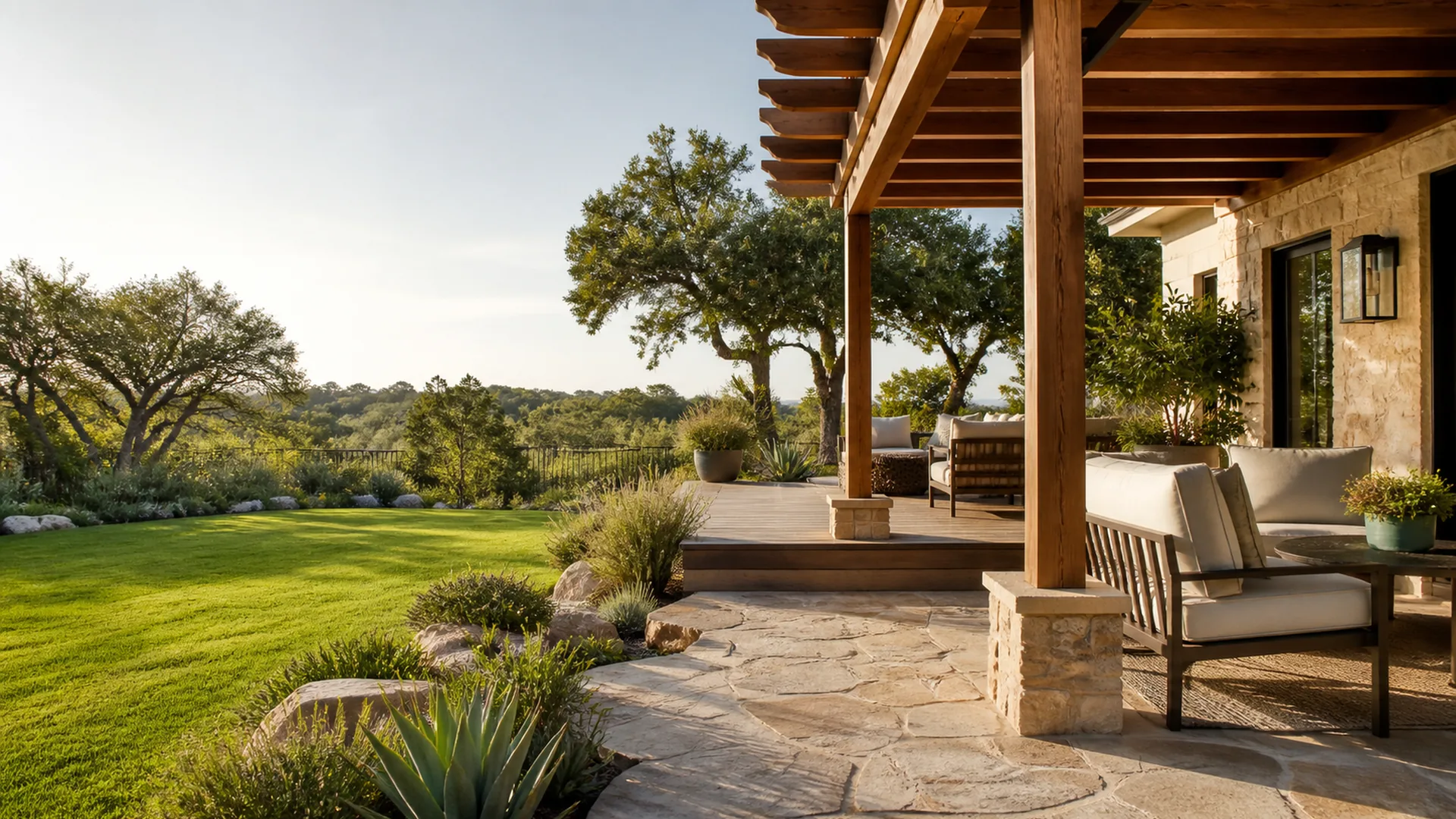
Planning a backyard upgrade in San Antonio usually comes down to three choices: a deck, a covered patio, or a pergola. They can look alike in a photo, but they solve different problems and carry very different price tags. A pergola is the budget-friendly way to add style and partial shade ($4,000–$12,000). A covered patio with a solid roof is the best defense against the brutal Texas sun and gives you year-round, rain-or-shine use ($12,000–$30,000+). A deck adds real, usable floor space and shines on sloped or uneven lots ($8,000–$25,000). As a veteran-owned general contractor, 214 Veteran Solutions designs and builds all three — pulling the San Antonio permit and coordinating licensed, insured trades so the job is done right. Here's how to choose in 2026.
Deck vs. Covered Patio vs. Pergola: Quick Comparison
| Feature | Pergola | Covered Patio | Deck |
|---|---|---|---|
| Typical San Antonio cost | $4,000–$12,000 | $12,000–$30,000+ | $8,000–$25,000 |
| Shade | Partial, filtered (open slats) | Full (solid roof) | None on its own |
| Rain protection | No | Yes | No |
| Adds floor space | No — sits on an existing surface | No — covers an existing surface | Yes — builds a new, often elevated floor |
| Best lot | Flat patio or poolside | Any — especially west-facing yards | Sloped, uneven, or elevated |
| Best for | Style, budget, defining a space | Beating the Texas heat, year-round use | Added square footage and views |
| Permit when attached | Usually | Yes | Yes |
How Much Does Each Cost in San Antonio? (2026)
| Structure | Typical San Antonio cost | What drives the price |
|---|---|---|
| Custom pergola | $4,000–$12,000 | Cedar vs. powder-coated aluminum vs. vinyl, size, attached vs. freestanding, add-on shade canopy or louvered roof |
| Covered patio (solid roof) | $12,000–$30,000+ | Roof type (open vs. insulated panel vs. shingle), matching your home's roofline, size, ceiling fans and lighting |
| Pressure-treated wood deck | $15–$30 per sq ft | Size, height off grade, railing style, footings |
| Composite deck (Trex-style) | $30–$60 per sq ft | Board line and color, railing, substructure, stairs |
These are typical San Antonio market estimates for 2026, not a quote. As a rule of thumb, a mid-size 300-square-foot deck lands around $6,000–$9,000 in pressure-treated wood or $10,000–$18,000 in composite. Adding lighting, built-in benches, a multi-level design, or an outdoor kitchen pushes any of these projects higher.
Which One Adds the Most Shade in the Texas Heat?
If shade is your top priority — and in San Antonio it usually is — the order is clear:
- Covered patio: the only option that gives you full shade and rain protection. A solid or insulated roof blocks the direct afternoon sun, so the space stays usable in July and during a sudden Hill Country downpour. Insulated aluminum roof panels also stay noticeably cooler than a bare shingle roof.
- Pergola: delivers filtered, partial shade through its open rafters. You can dial up the coverage with tighter slats, an adjustable louvered (motorized) roof, or a retractable canopy — a popular middle ground that still feels open.
- Deck: adds no shade by itself. On a sunny lot, most homeowners pair a deck with a pergola or a covered section so the space is actually comfortable at 5 p.m. in August.
Yard orientation matters. West- and southwest-facing backyards take the worst of the late-day sun, so they benefit most from a solid cover or a louvered roof. Attaching the structure to the house also extends the home's own shade line across the patio.
Best Materials for San Antonio's Climate
San Antonio's intense UV, summer heat, and expansive clay soil are hard on outdoor structures, and material choice is where a lot of regret happens:
- Decking: Composite (Trex-style) boards resist moisture, fading, splintering, and insects, and never need staining — a strong fit for relentless South Texas sun. Pressure-treated pine costs less up front but needs cleaning and re-sealing every year or two. Lighter board colors and stone-look surfaces stay cooler underfoot.
- Pergolas: Cedar is the classic, naturally weather-resistant choice. Powder-coated aluminum is essentially maintenance-free and won't warp, rot, or fade in the heat.
- Covered patios: Insulated roof panels run cooler than open shingle roofs; shingle covers can be matched to your existing roofline for a seamless look.
- Foundations: because Bexar County's clay swells and shrinks with the weather, every post needs properly sized concrete footings or piers so the structure doesn't heave or lean over time. This is one of the most common shortcuts cut-rate builders take — and the most expensive to fix later.
Do You Need a Permit for a Deck, Patio Cover, or Pergola in San Antonio?
In most cases, yes. Any roofed structure (a covered patio), a deck above a certain height, and any project that adds electrical for fans or lighting requires a permit and inspection through the San Antonio Development Services Department (DSD). Low, freestanding pergolas are sometimes exempt, but it's worth confirming before you build — the rules depend on size, attachment, and location relative to setbacks and easements. A general contractor pulls the permit and schedules the inspections as part of the job. For a deeper look at the local process, see our San Antonio building permit guide.
If you live in Stone Oak, Alamo Heights, or another HOA neighborhood, you'll likely also need HOA architectural approval before work starts. A good contractor prepares the drawings and submittal so the review doesn't stall your project.
Attached vs. Freestanding: Which Fits Your Yard?
- Attached structures tie into the house wall. They're typically more affordable (the home carries one side) and extend the roofline and shade directly off the back of the house — ideal for covered patios.
- Freestanding structures stand on their own posts anywhere in the yard. They give you flexibility to shade a pool, a fire-pit seating area, or an outdoor kitchen set away from the house. Just mind setbacks and underground utilities.
How Long Does an Outdoor Living Project Take?
Most San Antonio outdoor living projects run 1 to 4 weeks of build time: roughly 1–2 weeks for a pergola, 1–3 weeks for a deck, and 2–4 weeks for a covered patio once permits are in hand. Design, HOA approval, and DSD permitting add lead time on the front end, so plan a few weeks ahead of the season you want to enjoy it.
Why Build Your Outdoor Living Space With a Veteran-Owned General Contractor?
A deck, patio cover, or pergola touches more trades than people expect — concrete for the footings, framing and carpentry for the structure, a licensed electrician for fans and lighting, and sometimes roofing for a solid cover. As a veteran-owned general contractor, 214 Veteran Solutions manages the whole project under one contract and one point of accountability: we design the space, pull the San Antonio DSD permit, handle HOA submittals, and coordinate licensed, insured trade partners so the footings, framing, and electrical are all done to code. Founded by Air Force veterans and carrying general liability insurance, we build outdoor living spaces across San Antonio, Stone Oak, Boerne, Helotes, Schertz, and New Braunfels. Ready for a number on your project? Request a free deck or patio estimate or explore our patios, decks & pergolas service.
Frequently Asked Questions
Which is cheaper in San Antonio: a deck, a covered patio, or a pergola?
A pergola is usually the most affordable, typically $4,000–$12,000 for a custom build. Decks run about $8,000–$25,000 depending on size and material, and a solid-roof covered patio is generally the most expensive at $12,000–$30,000 or more because of the structural roof. The right choice depends on whether you're prioritizing budget, floor space, or full shade.
What adds the most shade — a deck, patio cover, or pergola?
A covered patio adds the most shade because it has a solid roof that fully blocks sun and rain. A pergola provides filtered, partial shade through open slats, which you can increase with a louvered roof or retractable canopy. A deck adds no shade on its own and is often paired with a pergola or cover in San Antonio's climate.
Do I need a permit to build a deck, patio cover, or pergola in San Antonio?
Usually yes. Any roofed structure, a deck over a certain height, and anything with added electrical for fans or lighting requires a permit and inspection through the San Antonio Development Services Department (DSD). Some low freestanding pergolas are exempt, but it's best to confirm. A general contractor pulls the permit and handles inspections as part of the job.
Is composite or wood decking better for the San Antonio heat?
Composite (Trex-style) decking holds up better to intense South Texas sun — it resists fading, moisture, splintering, and insects, and never needs staining. Pressure-treated wood costs less up front but requires cleaning and re-sealing every year or two. Lighter colors stay cooler underfoot, which matters during San Antonio summers.
Can I add a pergola or patio cover to my existing concrete patio?
Yes — that's one of the most common outdoor living upgrades. A pergola or patio cover can be anchored to a sound existing slab or set on new footings beside it, as long as the footings are sized for Bexar County's clay soil. A contractor will confirm the slab and engineering before installing.
How much does a covered patio cost in San Antonio?
A solid-roof covered patio in San Antonio typically costs $12,000–$30,000 or more, depending on size, roof type (open, insulated panel, or shingle matched to your home), and add-ons like ceiling fans, lighting, and an outdoor kitchen. It's the priciest of the three main outdoor living structures but the only one that delivers full shade and rain protection.